
T: +86-13955534080
E: salesb@masfy.com
E: salesb@masfy.com
West ChaoShan Road, Economic and Technical Development Zone, Maanshan,Anhui,China
Views: 0 Author: Site Editor Publish Time: 2026-10-20 Origin: Site


Picture a fully loaded 22-ton excavator at maximum boom extension. The entire upper structure, the operator, and tons of wet clay all rest on a single rotational joint. When this critical connection point degrades, you do not just face severe operational downtime. You introduce profound safety risks to the active job site. Selecting an inadequate replacement part is a gamble that fleet managers simply cannot afford.
In this comprehensive engineering guide, we will navigate the precise process of choosing the correct rotational bearing for your mid-weight digging equipment. Beyond basic tape-measure estimates, we will delve into technical blueprints, metallurgical requirements, and the often-overlooked practical nuances of field installation. These are the exact factors that ultimately dictate the operational lifespan of your machinery.
Current global construction trends reveal a massive shift in procurement strategies for mid-weight earthmovers. Fleet managers are rapidly abandoning budget-tier replacement parts. Why? Because tighter project deadlines and increasingly harsh excavation environments demand zero-downtime reliability. The industry now heavily favors premium, high-alloy structural components that guarantee an extended operational lifecycle. Engineers recognize that higher upfront material investments drastically reduce long-term maintenance overhead. Consequently, securing a precision-engineered slewing ring for 21-23 ton excavators has become a strategic priority rather than a simple maintenance afterthought.
Tonnage Dictates Design: A 21 to 23-ton machine demands a slewing ring specifically engineered to absorb the extreme tilting moments and dynamic shock waves unique to this exact weight class.
Technical Precision is Crucial: Successful procurement relies on flawlessly matching outer diameters, inner diameters, gear modules, and manufacturer load capacity curves.
Thermal Treatment is Non-Negotiable: For heavy-duty earthmoving, tooth surface induction quenching combined with core toughness is a fundamental requirement to prevent catastrophic gear shearing.
Installation Quality Equals Lifespan: Even premium-tier bearings will suffer premature destruction if mounting platforms are uneven or if high-tensile bolts are not torqued to exact factory specifications.
Maintenance Prevents Downtime: Strict adherence to dual-lubrication intervals and daily visual seal inspections are the most empirical methods to maximize the component's operational life.
To make an informed purchasing decision, one must first deconstruct the structural anatomy of this vital assembly. Unlike standard industrial bearings designed for high-speed rotation inside a controlled gearbox, an excavator turntable bearing is a massive, slow-turning structural joint. It is exposed to the harshest environmental elements. It serves as the exclusive mechanical bridge between the stationary tracked undercarriage and the rotating upper cab.
The architecture of this heavy-duty component consists of several precisely machined elements. The inner and outer rings act as the primary structural boundaries, typically forged from high-grade alloy steel. In standard configurations, the outer ring is anchored to the lower frame, while the inner ring secures the rotating upper structure. To handle the immense weight of a 20-plus ton machine, these bearings utilize single-row crossed cylindrical rollers or robust double-row ball bearings. These elements distribute multi-directional forces while facilitating low-friction rotation.
Furthermore, the vast majority of these assemblies feature internal gear teeth. These teeth mesh directly with the hydraulic swing motor pinion gear, translating hydraulic power into physical rotation. Finally, heavy-duty nitrile rubber seals are seated on the upper and lower gaps. They block environmental abrasives like silica dust and muddy water while retaining critical lubricating grease.
Earthmovers falling into the 21 to 23-ton category are universally recognized as the primary workhorses of the global construction sector. Operating in a demanding middle ground, they are neither lightweight utility trenchers nor massive 50-ton quarry behemoths. Therefore, the engineering parameters governing their replacement parts are highly specialized.
Procurement specialists must account for specific mechanical realities. For instance, when a machine in this class fully extends its boom with a bucket packed with wet material, the resulting leverage generates a massive overturning moment. The bearing must absorb this asymmetrical force without microscopic structural deformation.
In addition, dynamic shock loads present a constant threat. Plunging a bucket into frozen ground or operating a hydraulic breaker attachment sends violent, high-frequency shockwaves directly down the boom and into the rotational joint. To survive this, the bearing requires distinct static and dynamic load capacity curves. Utilizing a lighter-duty bearing will result in rapid raceway spalling. Conversely, over-speccing to a 30-ton bearing often introduces spatial fitment issues and unnecessary capital expenditure.
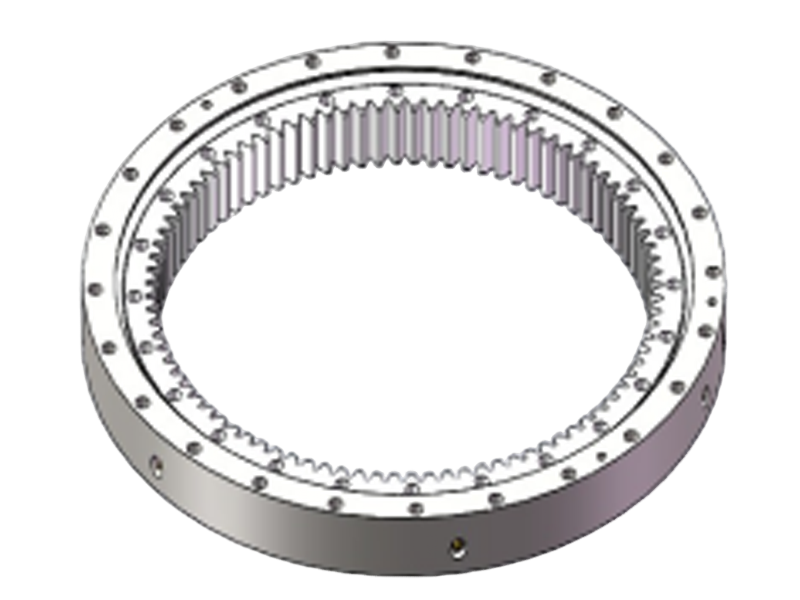
Procuring the correct drop-in replacement demands strict adherence to engineering blueprints. Relying on visual similarities is a guaranteed path to installation failure. Buyers must rigorously evaluate three primary technical categories to ensure seamless integration.
The physical footprint must align flawlessly with the existing structural housing of the machine. Even a single millimeter of variance in the Pitch Circle Diameter of the bolt holes can render a multi-thousand-dollar part entirely useless. When evaluating options, referencing established industrial benchmarks like the replacement excavator slewing ring model QND1220-32Z7 provides a reliable baseline for 22-ton equipment.
Measurement Parameter | Technical Description | Importance in Field Selection |
|---|---|---|
Outer Diameter | The total width of the exterior forged ring, often around 1220mm for this class. | Must seat precisely within the upper structure housing to avoid spatial interference. |
Inner Diameter | The internal void measurement of the inner ring. | Crucial for ensuring adequate clearance for the central rotary joint and dense hydraulic line routing. |
Assembly Height | The total vertical thickness of the combined inner and outer rings. | Incorrect height alters the critical mesh alignment between the swing motor pinion and the ring gear. |
Mounting Holes | Quantity, diameter, and exact Pitch Circle Diameter. | Misaligned holes will completely halt the installation process on the shop floor. |
Engineers evaluate viability using static and dynamic load charts. The peak operational stresses of your specific machine must comfortably fall below the structural limit curve of the component. Because these assemblies almost exclusively utilize an internal gear design, matching the exact gear data is paramount. The gear pitch, the precise tooth count, and the specific gear module must seamlessly mesh with the swing drive pinion. Incompatible gear geometry will trigger immediate mechanical binding, extreme heat generation, and eventual tooth shearing.
In the industrial parts market, the stark price disparity between various suppliers is largely dictated by metallurgy and advanced thermal treatment processes. For a component subjected to such extreme operational violence, material integrity is not a metric where fleet managers should seek budget compromises.
High-alloy structural steels, particularly 50Mn Manganese steel or 42CrMo Chromium-Molybdenum steel, are the industry benchmarks. 42CrMo is especially favored for the 21 to 23-ton class due to its exceptional tensile strength and fatigue resistance. Equally important is the medium-frequency induction quenching applied to the gear teeth. This localized heat treatment hardens the outer flank of the teeth, typically reaching 50 to 55 HRC, to combat abrasive wear. Simultaneously, it intentionally leaves the inner core relatively soft and ductile. This dual-property state allows the teeth to absorb sudden impact shocks without fracturing.
Ensuring a seamless field replacement requires more than simply knowing the weight class of your iron. While excavators in this range share similar operational profiles, structural mounting points vary wildly across different manufacturers and production years.
The most empirical method for identifying the correct component is referencing the Original Equipment Manufacturer part number. This alphanumeric code is typically stamped on a metal identification plate or listed within the official parts catalog. Utilizing this code eliminates all guesswork regarding load capacities and bolt configurations.
When an original replacement is cost-prohibitive or subject to massive supply chain delays, sourcing a high-tier aftermarket alternative becomes necessary. Prospective suppliers must explicitly guarantee cross-compatibility with your precise machine model and serial number range. In scenarios involving heavily modified equipment, reputable manufacturers offer reverse-engineering services. By analyzing the worn bearing and the mounting structures, engineers can generate CAD blueprints to custom-forge a bespoke solution.
Procuring a premium-grade component is merely the initial phase. Industry data consistently reveals that improper installation is the leading culprit behind premature field failures. A 22-ton earthmover generates immense dynamic forces. If the rotational joint is not seated with absolute precision, those forces will rapidly tear it apart.
Specifically, the structural integrity of the entire assembly relies on the absolute flatness of the mounting platforms. Imagine trying to mount a precision-machined steel ring over a bed of old sealant, rust flakes, or metal burrs. Tightening the bolts over these imperfections will instantly warp the bearing. Mechanics must aggressively clean the platforms using industrial solvents and wire wheels. Using a machinist straight edge and feeler gauges, technicians must verify that the surface out-of-flatness does not exceed the strict 0.15mm to 0.25mm tolerance limit.
Every induction-hardened raceway possesses a soft zone. This is a tiny hardening gap resulting from the manufacturing process, usually indicated by an S stamp or a colored plug. This slightly less durable section must be strategically positioned in the area of minimum load. For standard digging operations, this means aligning the soft plug perpendicular to the main digging axis.
Furthermore, reusing fatigued mounting bolts is a critical safety hazard. Technicians must install brand-new, high-strength tension bolts graded at 10.9 or 12.9. To ensure even clamping force, bolts must never be fully tightened in a consecutive circle. Instead, they require a specific crisscross star pattern, executed in three distinct stages using a recently calibrated hydraulic torque wrench. Finally, the microscopic gap between the swing motor pinion and the internal gear teeth must be calibrated to ensure the backlash falls within the acceptable 0.3mm to 0.6mm range.
To maximize your capital investment and achieve the projected operational lifespan, operators must transition from reactive repairs to proactive maintenance schedules. Neglecting routine care turns a high-grade heavy-duty excavator swing bearing into an expensive liability.
These complex joints require two entirely distinct lubrication strategies. The internal raceway demands a heavy-duty, Extreme Pressure lithium-based grease rated at NLGI Grade 2. Under normal conditions, this should be purged every 50 to 100 operating hours. Crucially, the operator must slowly rotate the cab 360 degrees while the grease is pumped to prevent dry spots. In contrast, the internal gear teeth operate under sliding friction and are exposed to the elements. They require a highly adhesive open gear grease designed to resist being squeezed out under heavy loads. This mesh point should be inspected and replenished every 150 to 200 hours.
Operators should also be trained to feel and listen to the machine. A subtle, rhythmic popping or harsh clicking felt through the cab floorboards during a 180-degree swing with a full bucket is often the first mechanical whisper of internal raceway spalling. Excessive axial play, experienced as a noticeable rocking sensation when the boom comes to a sudden halt, indicates that internal clearances have exceeded safe limits.
Selecting the optimal replacement part for applications in the 21 to 23-ton range is a critical technical decision. It directly impacts the safety, efficiency, and profitability of your heavy equipment fleet. By thoroughly understanding specific load requirements, insisting on superior metallurgy like quenched 42CrMo steel, and refusing to cut corners during installation, you ensure your machinery performs flawlessly in unforgiving environments. Do not wait for a catastrophic structural failure to address swing bearing wear. Proactive procurement is the ultimate key to uninterrupted earthmoving operations. For fleet managers seeking uncompromising durability and precise engineering, explore the exact Slewing Ring for Excavator models tailored to your specific machine requirements at MASFY to guarantee your next project remains on schedule.
With precise installation, a perfectly flat mounting surface, and strict adherence to factory lubrication schedules, a premium slewing ring can achieve an operational lifespan of 5,000 to 10,000 hours. However, utilizing the machine for continuous hydraulic rock breaking or operating in highly corrosive environments will significantly reduce this expected lifespan.
The most definitive empirical signs of failure include excessive axial play, audible grinding or popping noises during rotation, and the presence of silver metallic flakes in the purged raceway grease. If these symptoms appear, a dial indicator test must be performed to measure exact clearance limits against manufacturer specifications.
Replacing a rotational joint on a 20-plus ton machine is a highly complex, heavy-duty mechanical procedure. It strictly requires industrial lifting equipment to safely detach and suspend the multi-ton upper cab structure. Due to the severe safety risks, surface flatness machining requirements, and precise torque sequencing, this replacement should only be executed by certified heavy equipment mechanics.
Yes, provided the aftermarket component is procured from a reputable, specialized manufacturer with verifiable engineering standards. High-tier aftermarket bearings utilize the exact same metallurgical standards and undergo identical medium-frequency induction quenching as original parts, often at a significantly reduced price point. Always request material certificates and dimensional blueprints prior to finalizing a purchase.
The assembly requires two distinct lubricants to function correctly. The internal enclosed raceway necessitates a heavy-duty, Extreme Pressure lithium-based grease to protect the rolling elements from immense crushing forces. In contrast, the internal gear teeth require a highly adhesive, heavy-duty open gear grease formulated to withstand extreme sliding friction and resist environmental washout.
The most common culprits for premature failure are uneven mounting platforms that warp the bearing, improper bolt torque sequencing, and severe internal contamination. When nitrile rubber seals fail, abrasive silica dust mixes with internal grease to create a highly destructive lapping compound that rapidly destroys the rolling elements.
Technicians must rotate the upper structure to locate the point of maximum gear runout, which is often marked with paint by the factory. At this exact juncture, a feeler gauge is inserted between the swing motor pinion and the internal gear teeth. The gap must be confirmed to fall within the manufacturer's acceptable tolerance range, typically between 0.3mm and 0.6mm, to prevent mechanical binding.

 +86-13955534080


