
T: +86-13955534080
E: salesb@masfy.com
E: salesb@masfy.com
West ChaoShan Road, Economic and Technical Development Zone, Maanshan,Anhui,China
Views: 0 Author: Site Editor Publish Time: 2026-10-27 Origin: Site


Unexpected machinery downtime hemorrhages thousands of dollars daily. It brings critical job sites to a grinding halt. At the heart of this vulnerability often lies a failing turntable bearing. While these vital rotational components are engineered for extreme toughness, they are far from invincible.
In this comprehensive guide, we dive into the exact mechanical and environmental factors that degrade these heavy-duty joints. As field engineers and fleet managers know, understanding these dynamics is the secret to extending equipment life. It is the most effective way to maximize your return on investment.
Load Management is Crucial: Pushing equipment beyond its static or dynamic load capacities initiates irreversible raceway deformation. This drastically slashes the operational life of the component.
Installation Matters: Uneven mounting structures and improper bolt tensioning account for a surprisingly high percentage of premature structural failures.
Lubrication is Non-Negotiable: Consistent greasing of both internal raceways and external gears is the only way to prevent destructive metal-to-metal friction.
Contamination Kills: Damaged weather seals allow abrasive construction dust and moisture to infiltrate. This will rapidly destroy a bearing from the inside out.
Quality Equals Longevity: Investing in premium components with proper heat treatment and high-grade steel guarantees an extended lifespan. It also ensures a significantly lower total cost of ownership.
Walk onto any active earthmoving site, and you immediately see the stakes. A massive excavator swings a multi-ton load of rocky debris with pinpoint accuracy. The component making this seamless movement possible is the turntable bearing. Functioning as the critical rotational spine of heavy machinery, its primary role is to connect the upper cab and boom to the lower undercarriage. This precision-engineered joint allows the equipment to rotate a full 360 degrees while simultaneously supporting immense structural weights.
From a mechanical engineering perspective, these bearings must manage three distinct types of forces simultaneously. Axial loads push down directly on the joint due to the sheer weight of the upper structure. Radial loads act horizontally, generated by centrifugal forces during rapid rotation. Meanwhile, moment loads, also known as tilting loads, occur when the machine lifts heavy materials at full extension. This creates a severe leverage effect that attempts to pry the assembly apart. Properly managing these combined forces is exactly why selecting a high-quality slewing ring for construction is essential for overall site safety.
The financial implications of a mechanical failure here are substantial. When evaluating the total cost of ownership, a failing joint incurs costs far beyond the price of the replacement part itself. Swapping out a rotational bearing on a large crane or excavator requires halting the entire project. You must rent secondary heavy-lifting equipment to physically remove the upper cab and expend dozens of specialized labor hours. Therefore, mastering the maintenance of these components is an absolute economic necessity.
To maximize equipment lifespan, operators must intimately understand the strict mechanical limits of their machinery. Load capacities are categorized into two primary metrics: static and dynamic.
Static load capacity refers to the maximum force the bearing can withstand while the machine is stationary. For example, when an excavator holds a heavy concrete pipe suspended in a fixed position over a trench, the joint experiences extreme static stress. Dynamic load capacity dictates the maximum load the assembly can safely support while rotating. Specifically, dynamic loads are inherently more destructive. They introduce added friction, centrifugal force, and aggressively shifting weight distribution as the machine swings.
Pushing earthmoving equipment beyond its manufacturer-rated capacity initiates a silent process of microscopic destruction. When a machine attempts to lift a load exceeding its limits, the internal rolling elements like balls or rollers exert crushing pressure against the steel raceway.
This localized stress causes a phenomenon known as brinelling, which is permanent plastic deformation or denting of the steel track. Once the raceway is compromised, the smooth fluid rotation is permanently lost. As the operator continues to work, these micro-fractures expand. This inevitably leads to spalling, where jagged flakes of steel break away from the raceway. For equipment performing aggressive demolition in rocky soil, adhering strictly to load charts is the frontline defense against premature breakdown.
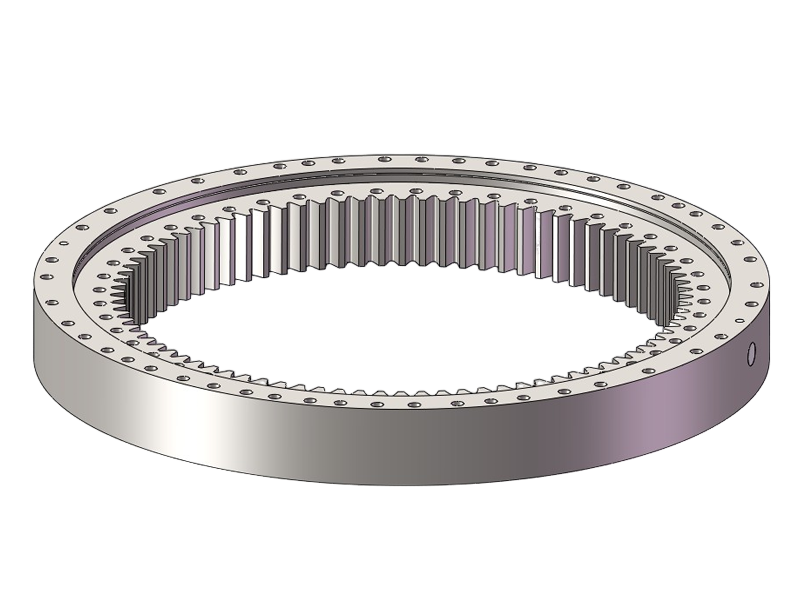
A turntable bearing is a precision-engineered marvel. Yet, its field performance is entirely dictated by the structural integrity of the chassis it is mounted to. Engineering studies utilizing finite element analysis clearly demonstrate that an uneven mounting surface will severely distort the bearing ring upon installation.
If the lower frame is warped, out of flat, or harbors dried concrete during installation, torquing the bolts down will forcefully bend the bearing to conform to that uneven shape. This unnatural distortion creates tight pinch points within the internal raceway. Consequently, as the machine rotates, the rolling elements experience dramatic spikes in stress as they force their way through these bottlenecks. This leads to rapid uneven wear and catastrophic failure. Machining the mounting surfaces to strict flatness tolerances prior to installation is an empirical requirement.
The structural integrity of the entire machine relies on the high-tensile bolts connecting the rotational joint to the frame. Utilizing the correct grade of fasteners, typically Grade 10.9 or 12.9, is only the first step. Applying the exact manufacturer-specified torque is vital for safe operation.
If bolts are under-tightened, the bearing will flex and shift microscopically during heavy lifts. Over time, this micro-movement acts like a saw, shearing the bolts and wallowing out the mounting holes. In contrast, over-tightened bolts are stretched beyond their yield point. This results in stress fractures and sudden brittle failure. Installation must always be performed by seasoned mechanics using calibrated hydraulic tensioners. They must strictly follow a crisscross star tightening sequence to guarantee clamping force is distributed evenly across the entire circumference.
Recent shifts in the heavy machinery sector highlight a growing emphasis on predictive maintenance and advanced metallurgy to combat premature component failure. Historically, the construction industry relied on reactive run-to-failure models, which resulted in catastrophic downtime. Today, market analysis indicates a strong trend toward integrating smart sensors directly into rotational joints. These sensors monitor acoustic emissions, vibration, and temperature spikes in real-time. They alert operators to microscopic raceway spalling long before it becomes a critical hazard.
Furthermore, advancements in tribology, the study of friction and wear, are pushing manufacturers to develop highly specialized self-healing polymer seals. As construction environments become increasingly demanding, with machines operating in deeper mines and harsher weather, the lifespan of these bearings is heavily influenced by a manufacturer's ability to adapt. High-purity steel and intelligent monitoring are rapidly becoming the new industry standard.
Lubrication is the absolute lifeblood of any heavy-duty rotational component. However, the internal raceway and the external or internal gear teeth operate in vastly different environments. They require distinct, specialized lubrication strategies.
The internal raceway houses the rolling elements and is highly susceptible to extreme friction and crushing pressure. It requires a heavy-duty extreme pressure lithium-based grease injected through specific zerk fittings. This grease creates a microscopic hydrodynamic film that physically separates the steel components to prevent metal-to-metal contact.
Meanwhile, the gear teeth meshing with the pinion gear of the swing motor are fully exposed to the open environment. They demand an open-gear lubricant boasting high adhesive properties. This prevents the grease from being violently flung off during rapid rotation while robust water-resistant additives ward off rust.
Maintenance frequency cannot be based solely on calendar days. It must be dictated by actual operating hours and environmental severity. A proactive disciplined maintenance schedule is the most cost-effective method to extend equipment life.
Operating Condition | Description | Recommended Greasing Interval |
|---|---|---|
Light Duty | Standard lifting, clean environment, intermittent use. | Every 100 to 150 operating hours. |
Medium Duty | Standard excavation, moderate dust, daily continuous use. | Every 50 to 100 operating hours. |
Heavy Duty | Demolition, mining, highly abrasive dust, continuous heavy loads. | Every 20 to 50 operating hours, or daily. |
Field mechanics should always rotate the equipment slowly while injecting grease into the raceway. This ensures uniform distribution across all internal rolling elements.
Construction sites are inherently hostile environments for precision mechanics. Airborne silica dust, abrasive soil, and liquid mud are constant unrelenting threats. If these microscopic contaminants breach the internal cavity of the bearing, they aggressively mix with the lubricating grease to form a highly abrasive paste.
This contaminated grease acts exactly like liquid sandpaper. It rapidly grinds down the rolling elements and the hardened raceway. In addition, if moisture infiltrates the joint, it degrades the chemical composition of the grease and initiates oxidation. Rust quickly pits the smooth surfaces of the steel, creating stress concentrations that accelerate spalling and total mechanical breakdown.
To combat contamination, bearings are equipped with heavy-duty rubber or polyurethane weather seals around their circumference. The primary function of these barriers is twofold. They lock the clean grease inside and block water and abrasive particles from entering.
Operators must conduct routine visual inspections of these seals during daily walk-arounds. Prolonged exposure to harsh UV rays, extreme temperature fluctuations, and chemical solvents can cause the seals to dry rot, crack, or tear. Additionally, over-pressurizing the joint with a high-powered grease gun can cause the seals to blow out of their retaining grooves completely. If a seal is found to be compromised, it must be replaced immediately before irreversible internal damage occurs.
Not all replacement parts are manufactured to the same rigorous metallurgical standards. The longevity of your equipment is directly tied to the purity of the steel and the precision of the factory heat-treatment process. Premium components are typically forged from high-carbon alloy steels, such as 42CrMo or 50Mn. These materials undergo vacuum degassing to extract microscopic impurities that could later cause internal stress fractures.
Furthermore, the raceways and gear teeth must undergo advanced induction hardening. This critical process hardens the surface of the steel to a depth of 3mm to 5mm and a hardness of 55-60 HRC to withstand continuous rolling friction. Crucially, it leaves the core of the ring softer and more ductile. This allows the assembly to absorb heavy shock loads without shattering like glass.
Procurement teams are often tempted by low-cost aftermarket alternatives to artificially reduce immediate repair budgets. However, empirical field data consistently shows that substandard parts lack proper case hardening. They utilize inferior polymer seal materials and exhibit sloppy gear machining tolerances.
These hidden deficiencies inevitably lead to premature failure, forcing a second highly expensive replacement within a fraction of the expected lifecycle. Investing in a premium, precision-engineered Slewing Ring for Construction 100-ton Excavator LQNA1815-45Z1 ensures precise dimensional tolerances. It guarantees load capacities and delivers a significantly higher long-term return on investment due to uninterrupted machine availability.
Even with strict adherence to maintenance protocols, heavy machinery components will eventually succumb to mechanical fatigue. Catching these warning signs early can prevent catastrophic equipment collapse, safeguard operators, and mitigate exorbitant unplanned downtime costs. Below is a comprehensive diagnostic guide detailing the primary indicators that your machinery requires immediate engineering attention.
One of the most definitive metrics of bearing health is the measurement of internal clearance. As the raceway and the rolling elements wear down from continuous dynamic loads, the physical space between them expands. Operators typically notice this as a distinct unsettling rocking or tilting sensation in the cab, especially when the excavator handles a heavy load at maximum boom extension. To accurately diagnose this axial play, maintenance teams should use a magnetic base dial indicator. If the measured deflection exceeds the allowable limits set by the manufacturer, the structural integrity is compromised.
A healthy rotational joint operates with a smooth consistent hum. Any deviation from this acoustic baseline is an immediate red flag.
Grinding: A continuous grinding noise typically indicates a total breakdown of the lubrication film, resulting in destructive metal-to-metal contact. It can also signify that abrasive silica sand has breached the weather seals.
Popping or Clicking: Intermittent popping sounds usually point to severe localized damage, such as a fractured gear tooth, a cracked ball bearing, or a shattered internal spacer cage.
Squealing: High-pitched squealing often indicates dry friction, signaling an urgent need for extreme-pressure grease application.
Routine lubrication is not just a preventive chore; it is a critical diagnostic opportunity. When purging old grease from the joint, technicians must carefully inspect the expelled lubricant. While fine metallic dust suggests normal wear, discovering distinct metal flakes or large silver shavings is a symptom of severe internal damage. Finding metal flakes requires taking the machine out of service immediately to perform a comprehensive tear-down inspection.
If an operator reports that the machine feels sluggish during a swing operation, or if the hydraulic system registers higher-than-normal pressure spikes just to initiate rotation, the joint is likely experiencing elevated internal friction. This can stem from over-tightened mounting bolts distorting the ring. It could also mean a complete failure of the internal cage causing the ball bearings to bunch together. Ignoring this sluggishness will not only destroy the bearing but can also cause severe collateral damage to the hydraulic swing motor.
Symptom / Indicator | Primary Diagnostic Method | Potential Root Cause | Recommended Action |
|---|---|---|---|
Cab Rocking / Tilting | Dial indicator deflection test | Excessive raceway wear, increased axial clearance | Compare with OEM limits; plan for replacement if exceeded. |
Grinding Noises | Acoustic monitoring during rotation | Lubrication failure, abrasive contamination | Inspect seals, purge old grease, re-lubricate, monitor. |
Metal Flakes in Grease | Visual inspection of purged grease | Spalling, brinelling, or gear tooth fracture | Halt operations immediately; schedule replacement. |
Sluggish Rotation | Hydraulic pressure gauge monitoring | Internal friction, cage failure, distorted mounting | Check bolt torque; inspect swing motor; evaluate bearing. |
When a bearing finally reaches the end of its operational lifespan, selecting the correct replacement is a critical procurement decision. A sub-optimal choice can lead to premature failure, voided warranties, and compromised site safety.
The first step in procurement is accurately matching the physical and mechanical specifications of the host machinery. The size and weight class of the machine dictate the required static and dynamic load capacities. For instance, a 15-ton mini-excavator utilizes a vastly different architecture than a massive mining shovel. Furthermore, it is vital to match the gear configuration, whether internal gear, external gear, or gearless, to the drive mechanism of the machine. The outer diameter, inner diameter, and bolt hole patterns must align perfectly with the chassis to prevent severe mounting distortion.
In the realm of heavy earthmoving equipment, the lowest upfront price rarely equates to the lowest total cost of ownership. To ensure operational longevity, it is imperative to source parts from manufacturers that strictly adhere to metallurgical standards.
For organizations managing large-scale fleets, investing in a precision-engineered slewing ring for construction is essential for maximizing uptime. Utilizing specific high-capacity models designed for massive machinery ensures that the equipment can operate safely under peak dynamic loads. It allows the machine to resist the highly abrasive conditions typical of heavy construction sites. By prioritizing rigorous quality control testing, such as ultrasonic flaw detection, fleet managers can confidently restore their equipment to peak performance.
The true lifespan of heavy machinery rotational joints hinges on a delicate balance of load management, precise installation, and rigorous daily lubrication. Environmental conditions and the foundational manufacturing quality of the steel also play a monumental role in determining how long your equipment stays out of the repair shop.
Proactive disciplined maintenance remains your absolute best defense against unexpected and costly machinery downtime. By regularly inspecting your equipment for early warning signs like cab rocking or contaminated grease, you can prevent minor wear from escalating into catastrophic failure. When the time comes for a repair or an upgrade, do not settle for substandard aftermarket parts. Explore the premium slewing ring for construction options at MASFY to guarantee long-term reliability, precise fitment, and ultimate worksite safety.
The operational lifespan is typically measured in operating hours rather than calendar years. For standard construction equipment operating under normal conditions, a high-quality bearing can last between 8,000 and 15,000 hours. However, this baseline is highly variable. If a machine is consistently pushed beyond its rated load capacity, or if maintenance schedules are ignored, the lifespan can plummet below 5,000 hours. Conversely, machines operating in clean environments with meticulous routine lubrication can easily exceed 15,000 hours of service.
The feasibility of repair depends entirely on the location and severity of the damage. Superficial issues, such as degraded weather seals or dried-out grease, can be easily remedied on-site through basic maintenance procedures. However, if the damage involves the structural components, such as spalling on the internal raceway, fractured ball bearings, or broken gear teeth, the bearing must be completely replaced. Attempting to weld or machine a compromised raceway destroys the factory heat treatment and introduces severe safety risks under heavy loads.
Because earthmoving machinery operates under immense friction and crushing loads, standard automotive grease is highly inadequate. Engineering best practices dictate the use of a heavy-duty extreme-pressure lithium-based grease, ideally with an NLGI Grade of 2. For equipment operating in highly aggressive environments, greases fortified with molybdenum disulfide additives are highly recommended. They provide an extra boundary layer of protection during heavy shock loads. Always consult the machine manual, as internal raceways and external gears often require different lubricants.
Proper bolt tension is the absolute foundation of structural stability. When a new bearing is installed, the bolts will naturally experience a slight degree of relaxation as the equipment settles into heavy operation. Therefore, it is a mandatory industry standard to re-check and re-torque all mounting bolts after the first 100 hours of initial operation. Following this critical break-in period, bolt torque should be systematically verified every 500 operating hours. It should also be checked at least once annually during major preventive maintenance intervals utilizing a calibrated hydraulic torque wrench in a star pattern.
Extreme temperatures directly impact the viscosity of the lubricating grease and the dimensional stability of the steel. In sub-zero environments, standard grease can thicken and channel, starving the rolling elements of lubrication and causing immediate dry friction. Conversely, extreme heat can cause the grease to thin out and leak past the weather seals. Engineers recommend switching to specialized synthetic greases tailored for specific seasonal temperature ranges to maintain a proper hydrodynamic film year-round.
Acceptable wear limits are strictly defined by the original equipment manufacturer and vary based on the diameter of the bearing and the size of the machine. Generally, maintenance teams measure axial clearance using a dial indicator. For a standard medium-sized excavator, an increase in axial play of 1.5mm to 2.0mm beyond the original factory specification often signals that the internal raceway is severely compromised. Once this specific threshold is breached, replacement is mandatory to prevent catastrophic structural failure.

 +86-13955534080


