
T: +86-13955534080
E: salesb@masfy.com
E: salesb@masfy.com
West ChaoShan Road, Economic and Technical Development Zone, Maanshan,Anhui,China
Views: 0 Author: Site Editor Publish Time: 2026-10-08 Origin: Site


Have you ever watched a massive tower crane hoist tons of steel and wondered why the entire structure doesn't just snap or tip over? The secret doesn't just lie in the heavy concrete counterweights. It rests on a hidden, highly critical mechanical joint. This component silently manages extreme weight distributions while allowing for buttery-smooth, controlled rotation. As engineers who spend years analyzing heavy machinery on bustling construction sites, we know that understanding this part is non-negotiable. In this comprehensive guide, we will break down exactly how slewing rings function, the raw physics behind their operation, and the strict maintenance routines required to prevent catastrophic job-site failures.
Load Management: Slewing rings in cranes are engineered to simultaneously handle axial, radial, and massive tilting moment loads during intense lifting operations.
Seamless Rotation: They serve as the mechanical foundation for smooth, 360-degree rotation. They securely support the crane's entire upper structure and its suspended payload.
Cross-Equipment Application: The fundamental engineering principles behind a crane's turntable bearing are nearly identical to those of earthmoving equipment, though specific shock-load profiles dictate the final internal design.
Maintenance is Critical: Strict "purge and rotate" lubrication regimens and routine structural bolt inspections are your primary defenses against premature bearing failure.
Strategic Selection: Choosing the correct replacement requires precise calculations of dynamic loads, gear module specifications, and operating environments.
To truly grasp the mechanics of heavy lifting, we must first define the core components that make it structurally possible. A slewing ring—frequently referred to in the industry as a turntable bearing—is a highly specialized mechanical joint. It is designed to facilitate rotational movement while simultaneously supporting immense, multi-directional weight.
Unlike standard automotive or small-scale industrial bearings, slewing rings are large-diameter components. They are specifically constructed to support heavy, slow-oscillating loads. The physical structure of a standard turntable bearing consists of several critical elements. Primarily, it features an inner ring and an outer ring, which establish the structural boundaries. Between these heavy-duty forged steel rings lie the rolling elements. These can be either spherical balls or cylindrical rollers, selected based on the machine's specific load requirements.
To prevent these rolling elements from grinding against one another and causing internal damage, specialized spacers or brass cages are inserted between them. Finally, industrial-grade seals are tightly integrated into the edges of the rings. These seals act as a vital barrier. They retain lubricating grease while preventing the destructive ingress of site contaminants like silica dust, rainwater, and metal shavings.
In the context of construction and industrial machinery, this component acts as the critical bridge connecting a stationary base to a rotating upper structure. For instance, in a tower crane, it connects the vertical mast to the rotating jib and operator cabin. Similarly, whether you are operating a massive wind turbine or utilizing a heavy-duty Slewing Bearing for Excavator, this part is not merely a pivot point. It is an absolute structural necessity. It dictates the operational safety, balance, and functional capacity of the entire machine. Without a properly functioning slewing ring, controlled rotational movement under heavy payloads would be physically impossible.
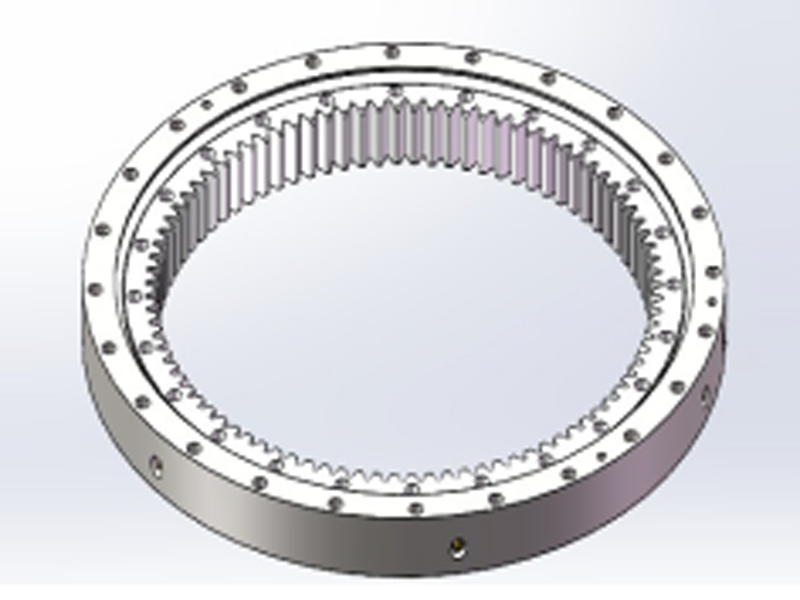
The primary function of this bearing goes far beyond facilitating simple rotation. It operates as a complex load-bearing mechanism that guarantees operational stability under extreme physical stress and leverage.
The most visible and dynamic function of the bearing is enabling the crane's upper structure to rotate freely. By securely connecting the stationary crawler base or mast to the movable boom, the bearing allows the operator to swing suspended loads in a full 360-degree arc. Furthermore, this rotation must remain exceptionally smooth and consistent. Any structural binding, hesitation, or jerking could cause the suspended payload to swing dangerously, threatening the safety of the ground crew. The precision engineering of the internal raceways ensures that mechanical friction is minimized. This allows hydraulic swing motors to turn massive structures with calculated, energy-efficient precision.
Cranes operate under severe, constantly shifting physical forces. Specifically, the slewing ring is the single point of contact responsible for managing three distinct types of loads simultaneously:
Axial Loads: This refers to the sheer vertical weight pressing directly down on the bearing. It encompasses the dead weight of the crane's upper cab, the heavy steel counterweights, and the actual payload suspended from the hook.
Radial Loads: These are horizontal forces acting parallel to the bearing's rotation plane. During daily operations, radial loads are generated by strong wind resistance against the boom, centrifugal forces during rapid swinging motions, or slight shifts in uneven ground levels.
Moment (Tilting) Loads: Without a doubt, this is the most critical and dangerous force a crane experiences. When a multi-ton load is suspended far out on the end of an extended boom, it creates a massive leverage effect. This leverage attempts to rip the upper structure away from the base. The bearing's structural integrity safely distributes this tilting moment evenly across the undercarriage, keeping the machine firmly planted on the ground.
In addition to load management, the turntable bearing is an integral part of the crane's power transmission system. Most heavy-duty slewing rings feature integrated gearing machined directly into either the inner or outer ring. These robust gear teeth are designed to mesh perfectly with the crane’s swing drive pinion. When the operator engages the joystick, activating the hydraulic or electric motor, the mechanical force transfers directly through the pinion into the bearing's gears. This physically drives the rotation of the entire upper structure.
Before diving deeper into mechanics, it is crucial to understand where the industry is heading. Recent analyses of heavy machinery trends show a massive shift toward predictive maintenance and smart components. Modern construction fleets are increasingly outfitting their slewing rings with IoT (Internet of Things) sensors. These sensors monitor internal vibration, raceway friction, and temperature spikes in real-time. By catching microscopic wear before it turns into a catastrophic failure, companies save millions in unplanned downtime.
Furthermore, metallurgical advancements are changing how these bearings are forged. The industry is moving heavily toward high-grade 42CrMo steel with deeper induction hardening. This allows manufacturers to increase the dynamic load capacity without increasing the physical footprint of the bearing, which is highly beneficial for compact urban construction equipment.
Understanding the internal mechanics clarifies exactly why these components are so vital for heavy-duty applications. Their reliable operation relies on precise gear meshing combined with advanced friction reduction techniques.
Manufacturers typically produce these bearings in three distinct configurations based on the equipment's design: internal gear, external gear, and gearless.
Internal gear configurations feature teeth cut directly into the inner ring. This setup is highly favored in environments where the gears require shielding from falling debris, abrasive dirt, and harsh weather. Consequently, it is heavily utilized in mobile cranes and earthmoving equipment where space constraints are tight. In contrast, external gears are located on the outer ring. This layout is frequently chosen for large tower cranes and offshore industrial applications. Mounting the swing drive externally allows for much easier maintenance access high up in the air. Gearless rings are relatively rare in construction cranes, usually reserved for applications where an external belt or secondary drive system dictates the rotation.
The true mechanical magic of the bearing lies within its rolling elements. Housed inside deep, induction-hardened raceways, these steel balls or cylindrical rollers bear the brunt of the machine's weight. When a crane lifts a steel beam, the immense downward force is transferred through the rings and distributed evenly across dozens of these rolling elements. By converting harsh sliding friction into smooth rolling friction, the bearing drastically reduces mechanical resistance. This elegant physics application allows hydraulic motors to pivot structures weighing hundreds of tons without generating excessive heat or consuming unnecessary fuel.
While the fundamental physics of rotation remain consistent across all heavy machinery, the specific engineering of the bearings varies drastically based on the application. Fleet managers who operate mixed equipment must understand the nuanced distinctions between lifting bearings and earthmoving bearings.
The daily operational environment of a digger is vastly different from that of a crane. Cranes generally execute slower, highly calculated, and massive lifting tasks where managing extreme tilting moment loads is the primary engineering challenge. Excavators, on the other hand, are subjected to aggressive, high-impact digging forces. When a bucket strikes solid bedrock or heavily compacted frost, a violent shockwave travels directly down the boom. It slams straight into the chassis joint.
Because of this violent shockwave, a 21-23 Ton Slewing Bearing for Excavator is engineered specifically for high shock-load resistance and rapid, repetitive slewing cycles. Operating constantly in harsh, mud-heavy environments, these components feature enhanced, heavy-duty sealing mechanisms. These seals are critical for preventing abrasive silica dust from penetrating the raceway, which would otherwise cause rapid, catastrophic abrasive wear to the internal rollers.
Feature | Crane Slewing Bearing | Excavator Slewing Bearing |
|---|---|---|
Primary Load Focus | Extreme tilting moments and heavy axial loads. | High radial shock loads and rapid axial shifts. |
Rotational Speed | Very slow, highly controlled, smooth arcs. | Fast, repetitive, and abrupt start/stop cycles. |
Sealing Requirements | Standard weatherproofing (unless marine grade). | Heavy-duty, multi-lip seals to block mud and abrasive dust. |
Typical Design | Double-row ball or three-row roller configurations. | Single-row four-point contact or specialized cross-roller. |
It is important to note that turntable bearings are not one-size-fits-all components. The specific type installed in a machine depends heavily on its physical size, maximum lifting capacity, and expected operational environment.
This remains the most common and versatile configuration for light to medium-duty mobile cranes. Featuring a single row of steel balls that make contact with the raceway at four distinct points, this design provides an excellent balance of load capacity, compact footprint, and cost-effectiveness. It is highly efficient at handling simultaneous axial, radial, and moderate moment loads during standard lifting operations.
When operational radial loads are higher, or a larger safety margin is mandated by site regulations, engineers often opt for double-row ball bearings. Utilizing two separate, parallel rows of steel balls, this design distributes physical stress over a much wider surface area. As a result, it provides superior stability and is frequently the bearing of choice for medium-duty crawler cranes and busy material handling ports.
For the ultimate heavy-duty lifting applications, three-row roller bearings are the undisputed industry standard. Instead of utilizing spherical balls, this robust design incorporates three independent rows of solid cylindrical rollers. The top and bottom rows absorb the massive axial and moment loads, while the middle row is dedicated entirely to managing horizontal radial forces. By separating the load distribution in this manner, the bearing can endure extreme structural stress. Massive tower cranes, offshore marine lifting systems, and heavy industrial equipment rely exclusively on this design to safely manage immense tilting moments.
Selecting a replacement part for your machinery is a critical engineering decision. Installing an improperly specified or subpar bearing can quickly lead to catastrophic equipment failure, severe safety hazards, and incredibly costly project downtime.
The foundational step in the selection process is thoroughly analyzing the load ratings. Buyers must evaluate both the static load rating (the absolute maximum load the bearing can support while stationary) and the dynamic load rating (its capacity during active rotation). It is crucial to calculate the maximum potential tilting moment based on the crane's longest boom extension paired with its heaviest payload. Consulting directly with a manufacturer's engineering team is highly recommended to ensure the chosen component meets or exceeds the Original Equipment Manufacturer (OEM) safety specifications.
Dimensional accuracy during the replacement process is completely non-negotiable. For instance, when sourcing a Slewing Bearing for Excavator (Model QND1220-32Z7) to fit a 21-23 ton machine, the mounting hole patterns must align flawlessly with the existing chassis. Additionally, the gear module, the specific number of teeth, and the pitch diameter must perfectly match the existing swing drive pinion. Even a single millimeter of misalignment can lead to severe gear binding, excessive wear, and eventual drive motor burnout.
The daily operating environment heavily dictates the required protective features of the component. Cranes operating in marine environments or coastal construction sites are constantly exposed to corrosive saltwater and high humidity. These machines require specialized anti-corrosion coatings, such as zinc spraying, paired with heavy-duty nitrile rubber seals. Similarly, equipment operating in highly abrasive mining or demolition environments requires robust, multi-lip sealing to prevent premature raceway degradation.
Even the highest quality, precision-engineered components will fail prematurely if subjected to neglect. Implementing a strict, well-documented maintenance regimen is the most effective strategy to maximize the operational lifespan of the bearing. A structured program allows operators to track historical service data, making it much easier to predict and prevent future component wear.
Consistent, high-quality lubrication is your primary defense against internal wear. Unchecked friction will eventually destroy the rolling elements. Because the internal raceway and the external gear teeth operate differently, they require distinct greasing protocols. For the raceway, operators should utilize the industry-standard "purge and rotate" method. This involves wiping down the zerk fittings to avoid injecting surface dirt, then pumping fresh, extreme-pressure (EP) lithium-based grease into the bearing while slowly rotating the equipment. You must continue this process until the old, discolored grease visibly purges from the seals. This carries trapped moisture and micro-debris out with it.
In addition, the gear teeth require regular, thorough coating with a highly adhesive, heavy-duty gear grease to prevent metal-to-metal grinding during pinion engagement. Dry gears will wear down incredibly fast under the stress of heavy loads.
Dozens of high-strength structural bolts secure the bearing to the machine's chassis. These fasteners endure immense stress during daily operations. Over time, the constant vibration of the engine and the shock of heavy lifting can cause these critical bolts to stretch or vibrate loose. Because loose bolts compromise the structural integrity of the entire machine, operators must check bolt torque regularly using a calibrated torque wrench. Checking them after the first 100 operating hours, and every 500 hours thereafter, is standard practice.
If a single bolt fails or loosens, it immediately transfers excessive stress to the adjacent bolts, triggering a dangerous, cascading structural failure. If any bolts show signs of metal fatigue or stretching, they must be discarded and replaced with new, high-tensile hardware immediately. Never reuse compromised fasteners.
Operators and maintenance crews must be thoroughly trained to recognize the early warning signs of internal failure. If you hear grinding, popping, or crunching noises during rotation, it strongly indicates metal spalling (flaking) inside the raceway or shattered rolling elements. Excessive play or tilt is another major red flag. If the crane cab or excavator house tilts forward significantly when lifting a load, the bearing's internal clearance has exceeded safe operational limits. During routine grease purging, the presence of silver or brass metal shavings in the old grease is a definitive sign of severe internal destruction.
Use this quick reference guide for basic diagnostic checks in the field. While it helps operators identify common mechanical issues on the fly, always consult a certified professional engineer for final safety assessments.
Observed Symptom | Potential Cause | Recommended Action |
|---|---|---|
Grinding Noises | Contamination ingress or internal metal flaking (spalling). | Purge grease immediately; inspect purged grease for metal shavings. |
Jerky Rotation | Damaged gear teeth, binding pinion, or broken internal rollers. | Inspect external gears visually; measure structural clearance with a dial indicator. |
Grease Leakage | Degraded, torn, or blown rubber seals. | Replace seals promptly; check automatic greasers for over-pressurization. |
Loose Fasteners | Excessive operational vibration or metal fatigue stretching the bolts. | Retorque all bolts to spec; replace any stretched or damaged hardware. |
Excessive Tilt/Play | Severely worn internal raceway or crushed rolling elements. | Measure axial play against OEM limits; ground machine and plan for replacement. |
The operational lifespan of a turntable bearing depends heavily on the severity of its daily usage and the strictness of its maintenance schedule. Generally, most high-quality bearings last between 10,000 and 15,000 operating hours. However, working consistently near maximum load capacity, or operating in harsh, corrosive environments without proper seal maintenance, can significantly reduce this timeframe. Meticulous tracking of operating hours and consistent proactive maintenance are the best ways to maximize this lifespan.
While they may look incredibly similar to the untrained eye, they serve entirely different mechanical purposes and cannot be used interchangeably. Excavator bearings are specifically designed to absorb rapid cycles and high-impact shockwaves from digging, whereas crane bearings are engineered to manage slow, massive tilting loads over a wide radius. Using a part not specifically engineered for your machine's unique load profile compromises structural integrity and instantly voids manufacturer warranties.
A grinding noise is almost always a sign of severe internal distress, primarily caused by a lack of proper lubrication or a breached seal. When dirt, sand, or water bypasses a broken seal, it contaminates the grease, causing the internal metal to flake or spall under pressure. This spalling creates hard metal debris that grinds inside the raceway, rapidly accelerating the destruction of the rolling elements. If you hear this noise, you must halt operations immediately to inspect the grease.
As a general industry rule, manual greasing should occur every 50 to 100 operating hours. However, you must always defer to the specific manufacturer's manual for your exact machine. Heavy, continuous use generates more heat and friction, depleting the protective grease layer much faster and requiring more frequent lubrication. Machines operating in highly dusty, muddy, or marine environments often demand daily greasing to constantly purge contaminants from the seals.
A complete mechanical failure of this component poses a severe, immediate, and potentially fatal safety risk. Because the bearing is the sole connection point between the base and the load-bearing upper structure, a catastrophic failure could cause the crane to lose its balance and tip over entirely. In worst-case scenarios, the upper cab and boom can detach from the undercarriage completely. Fortunately, warning signs like excessive tilt and grinding noises usually precede a complete failure.
Engineers measure bearing wear by checking the axial play (tilt clearance). This is done by mounting a magnetic base dial indicator between the stationary lower frame and the rotating upper structure. The operator then applies a load to tilt the machine forward and backward, recording the maximum movement on the dial indicator. If this measurement exceeds the OEM's allowable tolerance limit, the bearing is worn out and must be replaced.
The difference lies in where the gear teeth are machined. Internally geared rings have teeth on the inside of the inner ring, protecting them from falling debris and harsh weather, which is ideal for excavators and mobile cranes. Externally geared rings have teeth on the outside of the outer ring, which makes them easier to inspect, grease, and service. This configuration is widely preferred for towering structures like wind turbines and tower cranes.
The slewing ring is unequivocally the most vital pivot point of any heavy machinery. It silently bears the burden of immense payloads, ensures smooth and controlled rotation, and maintains the delicate balance required to keep multi-ton machines upright. By understanding the complex physics of how these bearings manage axial, radial, and moment loads, operators and fleet managers can better appreciate the necessity of strict maintenance routines.
Investing in precision engineering and high-quality metallurgy is not just about keeping a machine running; it is about preventing catastrophic downtime and safeguarding human lives on the job site. If your fleet is showing signs of wear, do not wait for a structural failure. Explore premium, OEM-matched solutions like the Slewing Bearing for Excavator and other heavy-duty components at https://www.masfy-slewingring.com. Protect your heavy machinery investment and ensure peak operational safety by choosing replacement components designed specifically for your equipment's rigorous demands.

 +86-13955534080


